
Essays From West of 98: 91
On Aging, Living Fully, and Living Well

Thanks for reading West of 98! If you missed it, I recently announced a new paid subscription for folks who wish to voluntarily support my writing financially! You can also make a one-time pledge here. Once a month I write The Prairie Panicle to summarize my reading, writing, and listening over the past month. Learn more about West of 98 here.
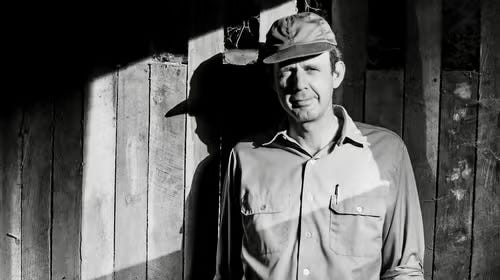
What is old age?
Recently, I heard the theory that “old age” was 10 years older than your current age. There seems to be some truth to that. Today, at age 41, certain ages seem significantly more youthful to me than they did when I was much younger. Looking back to childhood, I think about some teachers who seemed “old” at the time. Turns out, they really weren’t, particularly since I know them today. Given how many years ago they taught me, and considering that they aren’t THAT old today, they definitely weren’t “old” back then. But I digress.
There are a few clichés that would handwave away the meaningfulness of aging. “Age is just a number” and “you’re only as old as you feel” are a few of those turns of phrase. Those statements can be true and they reflect the idea that age need not be a limitation to vigor in life. But taken too literally, they can devalue the wisdom and experience that comes with a life well lived.
I think about that a lot more with my own aging. All of us can think about how we wished we had done better in our twenties or our thirties, whatever “better” might be for our own particular lives. Given that time travel seems to be relatively unlikely, it is futile to wish that we could go back to our younger years to do them over. But in truth, we only think about how we could have done them better with the experience that comes from the life lived since those days. We can look today upon our bad decisions, missed opportunities, and wasted time at age 25, but we do so with the vision of hindsight and life experience. No matter how much wiser we could have been at age 25, we simply could not have gathered all the knowledge and wisdom at that time that we have gathered today. And so, regrets about days gone by are a fool’s errand. There’s a saying that the best time to plant a tree was twenty years ago and the second best time to plant a tree is today. That’s how I feel about living life. The best time to live it wisely and to the fullest was when we were younger, but the second best time is right now.
Which brings me to Wendell Berry.
I am writing this on August 5, 2025, which is the occasion of Mr. Berry’s 91sth birthday. I’ve written on this occasion the last two years (“An Ode to Wendell” and “Plant Sequoias”) and last year’s essay remains my most-read piece of writing on the internet, outside my letter earlier this year to the Secretary of Agriculture. I have shared how and why this wise poet and author from Port Royal, Kentucky has shaped my own writing (and I included more of that in “Restatement” last fall). I am far from the only one. It’s been 65 years since his first work, the novel “Nathan Coulter,” was first published and countless writers, farmers, policymakers, and activists have been influenced by Berry’s fiction, non-fiction, and poetry. It was recently announced that Berry’s newest full-length novel “Marce Catlett: The Force of a Story” will be released in October 2025. Of course, I have already pre-ordered it and you should too. This will be the seventh work published by Mr. Berry since his 85th birthday! Not bad for a fellow who still does not own or use a computer.
One of my favorite Wendell Berry writings is a short story called “Fidelity.” It appears in a few collections of short stories, including one by that very name. I read it in a larger collection called “That Distant Land,” which I would recommend immensely to anyone who seeks to explore Berry’s fictional universe of Port William in depth. “Fidelity” is one of the more modern stories in that collection and it takes place in the second half of the 20th century. I won’t spoil it, because it truly is a remarkable bit of writing with some twists and turns that you would not expect from a short story that centers around some farmers and small town lawyers. But in essence, the short story is about the culmination of living well, aging, and ultimately, dying well. Death is the most inevitable but most easily avoided of topics in our lives. Few of us are eager to make it part of our casual conversations. Wendell Berry has never shied away from it, because he wisely places death within its rightful place of the cycle of life, for plants, animals, and humans alike. Death breeds life, from the dead leaves that turn to rich soil, which then grows the grass that gives up its life cycle to feed the livestock who are then slaughtered to feed humans, who are then returned to the earth at the end of their own life cycle. “Fidelity” grapples with the end of life for the beloved and once-powerful character Burley Coulter, a lovable and deeply flawed farmer, hunter, and raconteur of Port William. Burley is a veteran of World War I, along with countless all-night hunting trips with his hounds, rowdy bouts with a whisky bottle, and brutally hard work in the tobacco fields (only when necessary, of course) and he is now an old man in failing health. He has lived well and his people seek to ensure that his life ends equally well, which runs them afoul of the authorities of modern society. It’s a beautiful tale. I would be glad to send you a copy of it.
Wendell Berry was a younger man when he wrote “Fidelity,” but he was still older than most and he was much older then than I am today. As I have gotten older, I have come to value the art of living well more than I did when I was younger. I have been shaped by the experiences of other people, for good and bad, and by my own experiences as well. After law school and into the early part of my lawyer career, I drank two to three Dr Peppers a day. It was not an addiction so much as it was a choice. I enjoyed them. They tasted good. Dr Pepper became something of an inextricable part of my persona, such that people would regularly tag me in humorous social media posts about excessive Dr Pepper consumption. In early 2020, I concluded that I really needed to slow down my consumption. I was not having any health issues associated with it, but I did have a few that ran in my family and I concluded that it would not hurt if I simply did not consume those excessive amounts of sugary drinks. So, I just stopped. I went months without drinking a Dr Pepper. After about a year, the pent-up sugar fat began to burn off, especially in my face. People started to notice. I received questions from people about the weight I was dropping, some of which were enthusiastic (assuming I had been working out) and others of which were of well-meaning concern, wanting to make sure I was okay. I responded to many, “I literally just stopped drinking Dr Pepper” and I was met with surprise that I actually did such a thing and that it had such an impact. Ultimately, I dropped probably 20 pounds simply from that one change. It was good for me. I felt the benefits of it. I am glad I did it. Nowadays, I will drink one or two Dr Peppers or Mountain Dews1 a month, but I could not imagine returning to my earlier consumption. I try to spend more time gardening and less time sitting on the couch watching tv, although a challenging day at the law office can be a powerful de-motivator to simply sit and do nothing for an evening. I am no Burley Coulter, outworking all the other tobacco farmers when necessary and outplaying all the carousers when desired, but I am living well more than I used to.
I would be lying if I said Wendell Berry’s own life was not a direct impact on me in that way. He has lived without cell phone, television, and computer and has done just fine without them. I have all three. I use all three of them each day more than I want. I derive much less pleasure out of them than I used to. It is not lost on me that the Berry family worked hard on their farm and in their garden, raising much of their own food, and doing much of their own work with horses and mules rather than tractors, and he worked hard and well in such a way that allowed him to continuing doing so well into his 80s, long after most have called it a career doing much less physical forms of labor. He wrote hard around his hard physical labor and he continues to write hard well into his 10th decade of life. Wendell Berry’s life is not for everyone, because we are all uniquely talented in our own ways. We should live to be ourselves, not merely pattern ourselves after someone else.
But without question, Wendell Berry is an inspiration. He makes me strive to write harder and live better myself so that when I celebrate my own 91st birthday a half-century from now, I am making a fraction of the impact on the world that he is and living just as well with my family and friends as he does.
In 2002, George Strait released a single off his album “The Road Less Traveled” which was written by talented songwriters Tony Martin2, Mark Nesler, and Tom Shapiro. The chorus gave the song its title: “there’s a difference in living and living well.”
May we all remember that. The best time to start living well was twenty years ago, but the second best time to start living well is today.
James Decker is the Mayor of Stamford, Texas and the creator of the West of 98 website and the Rural Church and State and West of 98 podcasts. Contact James and subscribe to these essays at westof98.substack.com and subscribe to him wherever podcasts are found. Check out the West of 98 Bookstore with book lists for essential reads here.
The expanded distribution of Mountain Dew Baja Blast beyond the limited boundaries of Taco Bell has been a worthy reason to occasionally imbibe.
Tony Martin also wrote Joe Diffie’s “Third Rock From The Sun” one of the most hilariously chaotic country songs of the 1990s, which has an utterly magnificent music video.
I enjoyed this James. I’ve been reading Wendell since 2006, when I was living out of Texas. It had a big influence on my returning.
It doesn’t get any better than Fidelity. I got to meet Wendell several years ago, and he signed a hardcover copy of Fidelity and one of Jayber Crow.
My Grandpa, who grew up a sharecropper and one of nine kids down the road from you in Avoca, said of getting older: “Well, it sure beats the alternative.”
"And so, regrets about days gone by are a fool’s errand. There’s a saying that the best time to plant a tree was twenty years ago and the second best time to plant a tree is today."
Well done, James! Joseph Campbell defines regret as insights come too late. We all have them about "trees" not planted earlier, and we must feel them. Your reminder that we can always plant a "tree" today is a life saver! 👏